"Pilot": The World The X Files Explores
The X Beginning

The X-Files premiered on September 10, 1993. From its very first episode, the series was built around a contradiction. Its protagonists were two FBI agents, representatives of a federal institution devoted to gathering evidence, classifying crimes, and establishing official versions of events. And yet, the story centered on a government that concealed information, destroyed evidence, and kept watch over its own employees.
I've always found it interesting that Mulder and Scully spent the series trying to expose the very institution they represented. Even while questioning their own government, they still flashed those little FBI credentials wherever they went. They never stopped belonging to the institution they were trying to unmask.
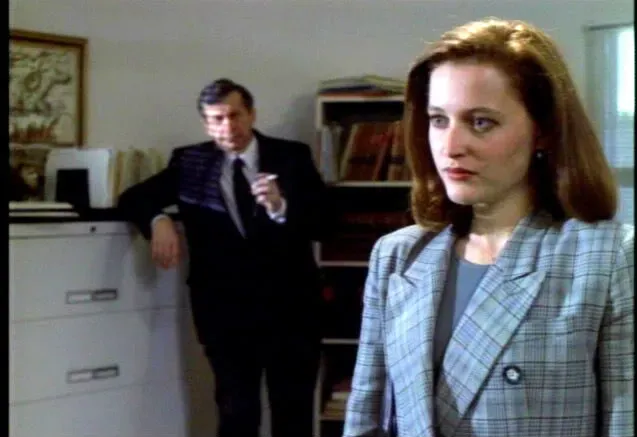
The pilot introduces what I initially dubbed television's greatest will-they-won’t-they. Dana Scully, a newly recruited FBI agent who has just completed both medical school and her training at Quantico, is summoned to an office full of gray-haired bureaucrats and assigned to supervise her future partner, Fox Mulder, and his work on the X-Files. By then, even Scully had heard of Mulder's reputation. Although he was respected for his work as a criminal profiler and psychologist, he was far better known throughout the Bureau by his nickname, Spooky Mulder.
And so we're introduced to the skeptic and the believer, the man Scully has been assigned to debunk. (Tell me that doesn't immediately scream, "these two are going to fall in love").
Mulder is lonely, obsessive, sentimental, and completely convinced that the paranormal and little gray men (not green ones) are real. Little by little, he manages to pull Scully toward his way of seeing the world. To her credit, though, she never arrives intending to follow anyone else's agenda. From the very beginning, she's determined to think for herself and do things her own way.
Over time, Scully comes to place an enormous amount of trust in Mulder, even if she never fully embraces the supernatural explanations he believes in. That difference never prevents them from pursuing the same goal, uncovering the truth hidden beneath the secrets guarded by the country's most powerful institutions.
So... Who Actually Trusts the Government?
To understand why The X-Files became the phenomenon it did, we have to look beyond the show itself for a moment. The stories a society chooses to tell or, in this case, broadcast, often reveal just as much about that society as the characters who inhabit them.
In the early 1990s, there seemed to be a particular appetite for stories about government conspiracies, paranormal phenomena, and everything that remained hidden from public view. It's no coincidence that, before The X-Files even premiered, Fox was already airing Sightings, a television series devoted to investigations of UFO encounters, ghosts, cryptids, and other unexplained phenomena.
But this was more than just a television or movie trend. These stories reflected a broader cultural climate in which the idea that institutions might be hiding the truth no longer seemed all that far-fetched. The government was gradually ceasing to be seen as a protector and increasingly becoming an institution capable of lying to its citizens, manipulating information, and keeping secrets safely out of public view.
If we place ourselves in the United States in 1993, the picture becomes even clearer. According to a report by the Pew Research Center, an independent, nonpartisan research organization, only 23% of Americans trusted the federal government. That distrust was likely inherited from Vietnam, Watergate, the political assassinations of the 1960s, and the countless covert operations carried out throughout the Cold War. Of course, for many Black Americans and other ethnicities in the US, distrust in the federal government was hardly new.

But there was another important shift taking place, one that The X-Files falls into as well (no American show ever completely escapes the Russian commies.)
With the Cold War over, the enemy could no longer exist solely beyond the United States’ borders. North American society suddenly found itself having to redefine what the German political philosopher Carl Schmitt called the friend-enemy distinction. In The Concept of the Political (1927), Schmitt argues that politics is fundamentally organized around this difference of who is an enemy and who is a friend. Every society, in one way or another, needs to identify a threat in order to define itself. So after the Cold War, who became the enemy? The new "other." I don't want to go down a philosophical rabbit hole, but Umberto Eco also made a similar observation. He argued that societies have a tendency of constructing enemies because doing so helps strengthen collective identity while giving shape and meaning to shared fears.
For many North Americans, that enemy moved inward. You can see it throughout popular culture: Nowhere Man (1995), JFK (1991), The Pelican Brief (1993), The Fugitive (1993), Enemy of the State (1998), The Truman Show (1998), and The Matrix (1999) all reflect, in one way or another, the growing suspicion that the threat wasn't "out there" anymore. It was embedded within the very institutions meant to protect us. Even the Star Wars prequel trilogy ultimately places the enemy at the very heart of the Republic. Which brings us back to that opening scene. A very young Dana Scully stands before her superiors, all representatives of the federal government. Sitting quietly among them is the mythic man smoking a cigarette, watching and listening. The enemy had been inside all along.
Being Abducted Is So In
Now, why UFOs? Why aliens? Why abductions?
Chris Carter, the creator of the series, said that his interest in the paranormal grew after reading the work of Professor John E. Mack, a Pulitzer Prize-winning psychiatrist at Harvard Medical School, and his analysis of a 1991 survey conducted by the Roper Organization. According to its findings, at least 3.7 million Americans may have believed they had been abducted by aliens. The survey would later be criticized for never asking participants directly whether they believed they had been abducted. Instead, it listed experiences that could be interpreted as signs of alien abduction: missing time, waking up unable to move, seeing strange lights, feeling as though they were floating, and discovering unexplained marks on their bodies. All symptoms that had become characteristic of this modern myth, and that we would eventually see throughout The X-Files.
Then there was the fact that Carter had grown up with the Watergate scandal unfolding around him. It is hardly surprising, then, that many of the qualities he recognized in himself would eventually find their way into Mulder, especially that constant impulse to question authority and distrust those in power, a trait Carter has attributed to himself in several interviews. He also named All the President’s Men (1976) as one of his favorite films. Based on the Watergate event, the film follows two journalists who receive government secrets from an anonymous source known as Deep Throat… Sounds veeeery familiar.
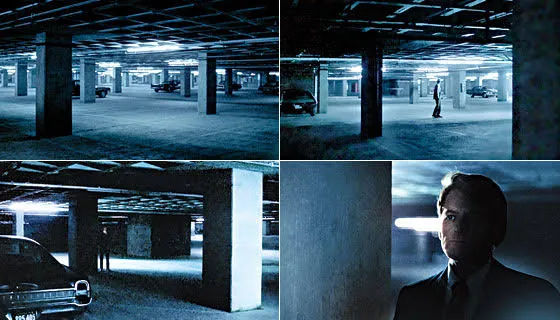
Mulder was not the only one who wanted to believe. One of the most popular bestsellers of the late 1980s was Communion: A True Story, written by Whitley Strieber about his own alleged experience of alien abduction. He, too, described missing time and disturbing flashbacks that, after undergoing hypnosis, came to interpret as memories of encounters with extraterrestrials. Again, this all sounds very, very familiar. The book was even adapted into a film in 1989, starring Christopher Walken.
Little X Note: One of my favorite episodes, “Jose Chung’s From Outer Space,” partly parodies Communion by featuring a book cover that closely resembles Strieber’s.
Anthropologists, psychologists, and sociologists would go on to study these phenomena in books such as Carl Jung’s Flying Saucers: A Modern Myth of Things Seen in the Sky, Susan Clancy’s Abducted: How People Come to Believe They Were Kidnapped by Aliens, and Thomas Bullard’s UFO Abductions: The Measure of a Mystery.
But these stories went back even further. In the 1960s, the case of Betty and Barney Hill became widely known. They were a married couple who did not seem to fit the usual profile people associated with stories of alien abduction. Betty was a social worker and Barney worked for the postal service. They were deeply involved in their community, their church, and the NAACP, the National Association for the Advancement of Colored People. They were also an interracial couple living through the height of the civil rights movement.
The Hill incident supposedly began while they were driving home from a vacation. As they passed through the White Mountains of New Hampshire, they claimed to notice a light following them. Then came the now-famous missing time, a gap of roughly two hours. Over the following weeks, they experienced many of the symptoms that would later become standard features of abduction narratives. Eventually, under hypnosis, both of them recalled what they believed had been medical examinations performed on them.
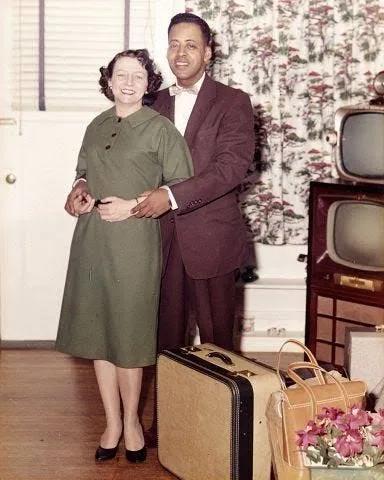
The story of Betty and Barney Hill, two respectable citizens who were well regarded within their community, practically established the modern alien-abduction myth and many of its now-familiar symptoms.
It was within this very Spielbergian cultural atmosphere that The X-Files was born, at a time when alien abduction had already become a familiar story and part of the cultural language of the United States.
In the end, alien abductions, whether we believe in them or not, became what Carl Jung described in Flying Saucers: A Modern Myth of Things Seen in the Sky (1958) as modern myths born from an era marked by collective anxiety (think the Cold War and the threat of nuclear conflict) while also giving shape to that anxiety. Then Jung, being Jung, takes things one step further. He connects these unidentified flying objects, supposedly circular or spherical in shape, with the circle itself, one of the oldest symbols associated with perfection, order, and wholeness. Through his psychological theories and his concept of the mandala, the circular form came to represent, for Jung, the psyche’s search for integration. But that is a very interesting rabbit hole, and one worthy of its own post. Let’s keep going...
The Party Takes Place Inside the UFO
The pilot episode takes Mulder and Scully to the town of Bellefleur, Oregon, where a young woman is found dead in the woods with two distinctive marks on her lower back. She is the fourth member of the Class of '89 to die under these strange circumstances.
As Mulder walks Scully through the case, partly to get her opinion and partly, it seems, to evaluate her, Scully proposes every plausible natural explanation she can think of. From her very first line of reasoning, we immediately understand the framework through which she sees the world: conventional, scientific, rational. None of those explanations satisfy Mulder, however. He wants to look elsewhere. To move beyond the conventional, he suggests that the fantastic deserves to be considered as a genuine possibility.
This scene doesn't just establish the worldview each character inhabits (Mulder as "the believer" and Scully as "the skeptic.") It also reveals how far each of them is willing to go and what kinds of questions they're prepared to ask.
As much as Scully is undoubtedly my favorite character, I find myself identifying more with Mulder's search (although I'd probably be somewhere in between the two). There's something about the way he looks at the world that resists what the sociologist Max Weber called the disenchantment of the world, the gradual process through which science and technology come to explain more and more of reality. Mulder allows himself to ask whether there are still things that lie beyond those explanations Scully so desperately tries to hold onto. Whether there's still room for mystery. Whether there are things we simply don't understand yet.
Mulder immediately recognizes this case as another step toward proving the existence of extraterrestrial life. Throughout the episode, he and Scully share one of their first truly intimate conversations. Despite barely knowing each other, and despite the mutual distrust between them (Scully because she's working with a man whose beliefs seem completely irrational; Mulder because he's convinced she has been sent by their superiors to spy on him), Mulder opens up to Scully, our audience surrogate, the character through whom we enter this world, and reveals what lies at the heart of his obsession. The reason.
When he was twelve years old, his eight-year-old sister Samantha disappeared from her bed one night without leaving behind a single piece of evidence. She was never found. Her disappearance shattered the family, leaving behind a silent emptiness that would define all of them. Years later, after discovering the X-Files, Mulder found himself especially drawn to cases involving alien abduction. Under hypnosis, just as we saw happen over and over again in the cases I mentioned earlier, he was able to return to the repressed memory of the night Samantha disappeared and describe what he believed were all the signs pointing toward… Well, an alien abduction. I'm going to pause here for a moment because I've always found the idea of alien abduction fascinating. Maybe because, as a kid, it terrified me for reasons I could never quite explain.
I mentioned earlier that abduction stories have become our modern myths. Just as the ancient Greeks told stories about gods descending from Olympus, or Celtic folklore warned of fairies stealing children away, the technological age simply replaced the gods with spaceships.
I already touched on Jung's ideas a little earlier. His question wasn't so much whether UFOs were objectively real, but rather what psychological need the image of the UFO expresses. Why does the idea of being taken away by a superior intelligence resonate so deeply across popular culture?
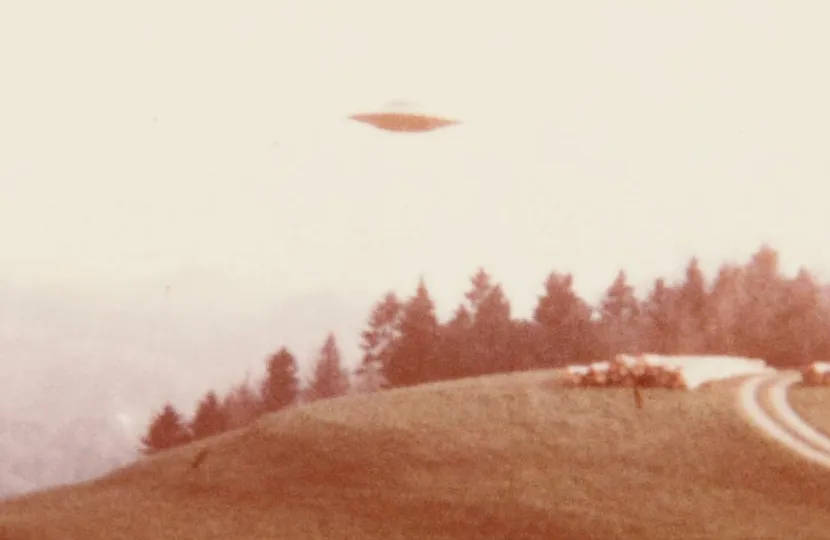
Personally, just seeing an image of an alien as a child was enough to give me chills. The thought of being taken away from my mom while I slept made me hide beneath my blankets until I eventually fell asleep. As I got older, my interpretation changed a little (I no longer think I'm about to be abducted... thankfully). But I began connecting that fear to the exact same feeling I get whenever I look at photographs of distant galaxies, the overwhelming realization of how unimaginably small we are.
Psychologically speaking, abduction is deeply tied to the loss of autonomy. To being completely defenseless. To having no escape. To surrendering all control over our own bodies while someone (or something else) does with them whatever it wants. This, incidentally, becomes a recurring theme throughout The X-Files.
Whenever we see fictional abduction scenes, they almost always revolve around the same imagery: little gray beings with enormous black eyes performing medical examinations on human bodies, taking tissue samples with needles, silently observing and recording everything. Replace the aliens with human beings and… It starts looking suspiciously like a hospital. One of the most familiar institutions of modern life, where, in a way, we surrender control to "the professionals," people we've often never met before.
There's another curious aspect to these stories. When we imagine what aliens might do to us if they ever found us, what we fear most is almost always exactly what we ourselves have done to countless other species... and, quite possibly, what we would do to those little gray travelers if we ever happened to find them first.
Susan Clancy, whom I mentioned earlier as the author of Abducted: How People Come to Believe They Were Kidnapped by Aliens, explores how people come to interpret ambiguous experiences as evidence of alien abduction. Coming from a cognitive psychology background (and being entirely skeptical of extraterrestrial visitation) Clancy raises several interesting questions, even if I don't entirely agree with all of her conclusions. She argues that many people who believe they've been abducted begin with an experience that is completely real. Sleep paralysis, a nightmare, a fragmented memory, an intense emotional event. All experiences that fall well within the normal range of human psychology.
Through hypnosis, those scattered sensations eventually become woven into a coherent narrative shaped by internal experiences and popular culture. People genuinely believe they were abducted because the emotional intensity of the experience feels undeniably real.
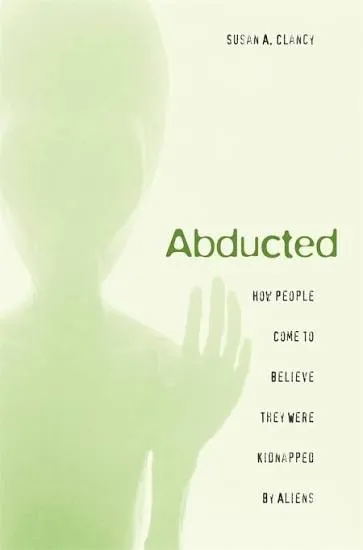
Clancy opens her book with several firsthand accounts from people who believe they were abducted. In the very first story, one interviewee describes telling a therapist about recurring nightmares (or what she believed were nightmares) in which something nonhuman pinned her down, suffocating her, leaving her unable to move or scream. The therapist immediately interpreted the experience through childhood, sexuality, and the possibility of repressed trauma. The woman says she couldn't connect the experience to anything sexual, but the conversation stayed with her. Looking back over both adolescence and adulthood, she began noticing that images of aliens would appear in her mind for no obvious reason. Then, after reading a book about alien abductions, everything suddenly seemed to fall into place. The book described exactly the sensations she believed she had experienced.
As a psychology student, if I were to approach this case from a psychoanalytic perspective (the framework I personally feel more comfortable with) I wouldn't argue that the aliens themselves are the repressed content. Rather, I would see them as a substitute representation, one that eventually becomes linked to an emotional charge originally attached to something else. A representation may be repressed while the affect associated with it finds another destination. From that perspective, a traumatic or emotionally overwhelming experience could eventually come to express itself through a different, more tolerable image. In this case, an alien abduction would function as that substitute representation, a way of organizing and making sense of an experience that otherwise remains diffuse and impossible to symbolize.
Interestingly, this isn't entirely incompatible with Clancy's proposal, despite the fact that they're working from completely different theoretical traditions (Clancy doesn't seem particularly fond of psychoanalysis). Where Clancy explains the phenomenon through memory reconstruction, she argues that many people begin with ambiguous experiences such as bodily sensations, sleep paralysis, panic attacks, or fragmented memories. These experiences carry enormous emotional weight but initially lack an interpretive framework. When people later encounter a cultural narrative that appears to explain what they felt (alien abduction stories, for example) their memories begin organizing themselves around that narrative. People aren't lying when they say they've been abducted, they genuinely believe they were because they're reconstructing memory and making sense of their experiences using the narratives their culture makes available to them.
It's very tempting to apply that same exercise to Mulder. If we were to read his character through that same lens (setting aside the fact that The X-Files repeatedly confirms the existence of paranormal phenomena), we might argue that his need to explain Samantha's disappearance as an alien abduction also reflects a need to attach unbearable trauma to a representation capable of giving it meaning. Because perhaps what is truly unbearable isn't believing in aliens, it's accepting that a little girl can disappear forever without leaving behind a single answer or a single clue as to where she went or what happened to her.
Getting a little carried away, I should probably come back down to Earth and return to the pilot itself, the vehicle for this entire information dump. The first episode lays the groundwork for the series as a whole. We discover that the bodies really are taken into the woods (with the help of one of the students from the Class of '89, who ends up playing both victim and perpetrator) to be abducted by a blinding white light before being returned, lifeless.
Perhaps the most important thing, though, is that while Scully is sent by her superiors to use scientific rationality to debunk Mulder's paranormal and conspiratorial theories, their relationship quickly proves to be far more complicated than that of a simple believer and skeptic. Their trust begins through moments of emotional vulnerability... and, strangely enough, literal physical vulnerability as well (Scully literally pulls off her robe and says, "Look." It makes perfect sense in context, I promise.)
But I think that's a conversation for another time, once I have a clearer picture after making my way through the episodes that follow. For now...
I'll stop writing.